


Posted by:
Comments:
Post Date:
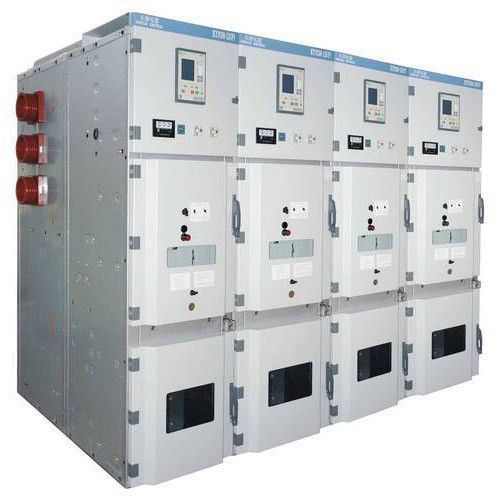
Not all electrical enclosures are created equal. When it comes to low-voltage switchgear (under 1,000V AC), the standard that governs safety and performance is IEC 61439-2 . This standard introduces a critical concept for compartmental enclosures: Forms of Internal Separation.
These "Forms" aren't just about organization—they are a systematic approach to protecting personnel and equipment from arc flashes, accidental contact, and fault propagation .
Here is how compartmental separation keeps you safe.
The Core Safety Mandate
Regardless of the Form number, the standard requires two things from compartment barriers:
- IPXXB Protection: Protection against finger contact with hazardous live parts .
- IP2X Protection: Protection against solid foreign objects (like tools or wire clippings) .
If your enclosure has a Form higher than 1, any parts that stay live when a unit is switched off must meet these safety thresholds .
The 4 Levels of Compartment Safety (Form 1-4)
The standard defines four distinct levels of compartmentalization. The higher the Form number, the safer the isolation .
- Form 1 (No Separation): The entire enclosure is open inside. No barriers between busbars and functional units. Safety Level: Low risk of arc containment .
- Form 2 (Busbar Separation): Busbars are separated from the functional units, but terminals may be exposed. Form 2b is safer because terminals are separated from busbars .
- Form 3 (Functional Unit Separation): Each device (breaker, starter) has its own separate compartment. Busbars are isolated, and units are separated from each other. This confines an internal arc to one unit .
- Form 4 (Terminal Separation): Everything is separated: Busbars, functional units, and the cable termination points. Form 4b provides the highest safety, placing each set of cables in its own individual, enclosed compartment .
Why Choose a Compartmental Enclosure?
Implementing Forms 3 or 4 turns a standard box into a high-safety system:
- Arc Flash Containment: Barriers prevent an arc flash from propagating to adjacent compartments .
- Maintenance Access: You can work on one functional unit while adjacent units remain energized, without risk of accidental contact .
- Fault Limitation: A fault in one section is physically isolated from damaging the busbars or other circuits .
A Word of Caution
While Form 4 offers the highest physical separation, the standard notes that no form of separation guarantees 100% safety for live working. Always perform a risk assessment before opening a door .
The Bottom Line
When specifying an enclosure, don't just ask for a "compartmental" design. Ask for the Form number (e.g., Form 3b or 4b). It is the only way to ensure that your barriers provide the level of protection defined by IEC 61439-2.
